English| EUR
Suggested for you
More currencies
Choose a language
A four-day route from Marrakech to Fes delivers Morocco's most dramatic desert scenery without the fatigue of longer crossings. The Sahara Desert anchors the journey, with Erg Chebbi's dunes serving as the visual and logistical centerpiece between mountain passes and ancient kasbahs.
Quick answer
What to see in Morocco in 4 days centers on the Sahara Desert at Erg Chebbi, near Merzouga in Errachidia Province. The route typically includes the High Atlas crossing via Tizi n'Tichka pass, the UNESCO kasbah at Ait Benhaddou, the Todra Gorge, and an overnight desert camp experience. The desert area itself requires no entrance fee and remains accessible year-round, with optimal arrival between 06:00 and 18:00 for comfortable temperatures and the best light on the dunes.
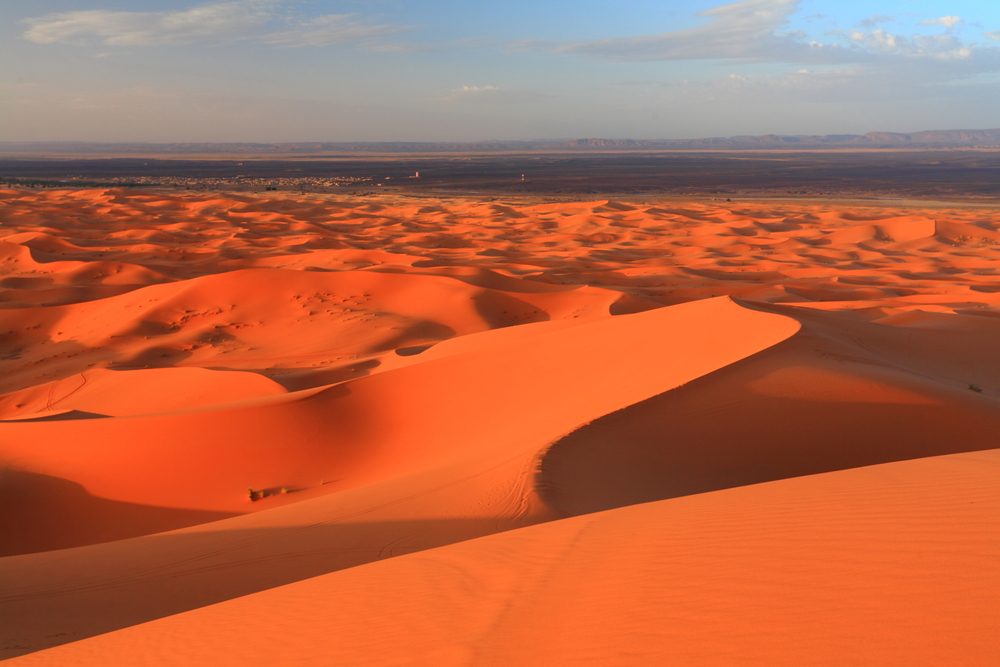
The Erg Chebbi dune field rises 150 meters above the desert floor, making it the tallest sand formation accessible on a standard four-day Morocco crossing. These dunes mark the geographic halfway point between Marrakech and Fes, positioned roughly 560 kilometers from each city and requiring careful timing to experience the desert at dawn or dusk rather than midday heat. A Morocco 4-day desert route balances transit with immersion. Day one crosses the High Atlas via the Tizi n'Tichka pass at 2,260 meters, descending through the Ounila Valley to Ait Benhaddou's fortified village. Day two threads the Dades Valley and Todra Gorge before reaching Merzouga by late afternoon, positioning travelers for camel treks into Erg Chebbi at sunset. Day three opens with sunrise over the dunes, followed by the northbound drive through the Ziz Valley oases and Middle Atlas cedar forests, reaching Fes by evening. Day four remains free for Fes exploration or return logistics. The Sahara segment demands the most preparation. Merzouga sits at the edge of Erg Chebbi, serving as the launch point for camel convoys and 4x4 transfers into the dune field. Most travelers spend one night at a fixed desert camp, positioned 45 to 90 minutes from the village depending on dune depth. These camps cluster in the western shadow of the main dune ridge, where evening shade extends longest and predawn cold peaks. The desert area requires no admission fee, though organized transport and camp stays carry separate costs. Berber guides lead camel treks at dawn and dusk when sand temperatures permit barefoot walking and photographic light turns the dunes copper and violet. Midday visits between November and February remain tolerable, but June through August heat makes afternoon exposure dangerous without vehicle shelter. The dunes receive no artificial lighting, making stargazing and silence the primary after-dark experiences. Mobile coverage drops to zero within 20 minutes of Merzouga, and the nearest fuel, ATM, and medical services remain in the village. The four-day Morocco desert itinerary sacrifices depth for geographic range. Travelers see the Atlas, kasbahs, gorges, and Sahara, but each stop lasts 60 to 90 minutes except the overnight desert camp. This pacing suits first-time visitors prioritizing iconic landscapes over prolonged immersion, delivering a visual survey of southern Morocco's terrain shifts between mountain and sand.
“The Erg Chebbi dune field rises 150 meters above the desert floor, making it the tallest sand formation accessible on a standard four-day Morocco crossing.”
This four-day route traces the classic overland arc from Marrakech to Fes via Erg Chebbi, suited to travelers who want a full desert experience without rushing the mountain passes or overnight camps.
Depart early, crossing the High Atlas via Tizi n'Tichka pass (2,260 m) and stopping at Aït Benhaddou before continuing to Dades Gorge for the night. Transit time approximately 6–7 hours with photo stops.
Drive through Todra Gorge and the Ziz Valley, arriving at Merzouga by late afternoon. Transfer to your desert camp base near Erg Chebbi before sunset.
Spend the full day around the dune field—camel treks typically launch at dawn or late afternoon when sand temperatures drop. Midday offers free time at the camp or a visit to nearby Khamlia village.
Depart after breakfast for the longest leg, crossing the Middle Atlas via Errachidia, Midelt, and Ifrane. Expect 7–8 hours of driving, arriving in Fes by evening.
The period between March to May and September to November offers the most temperate conditions for exploring the Sahara Desert. Planning your arrival within the established daily window ensures favorable lighting and safer temperature management.
Pleasant days 20°C to 28°C
Ideal for daytime exploration and clear evening skies.
Stable warmth 20°C to 25°C
Consistent weather patterns favor desert treks and overnight stays.
Extreme heat exceeding 40°C
High temperatures restrict activities to early morning and late evening.
Cool days 15°C to 20°C
Nights reach freezing temperatures requiring specialized gear.
Verdict: The optimal window for your 4-day excursion is April or October, ensuring you arrive within the 06:00–18:00 timeframe to manage heat and light effectively.
The Erg Chebbi dunes are located in the Errachidia Province near the town of Merzouga. Access from Marrakech requires navigating the High Atlas mountain range via primary regional roads.
Route N9 through Ouarzazate then N10 and N13
Supratours line from Marrakech to Merzouga
Private transfer via N9 and N13
Address: Erg Chebbi, Merzouga, Errachidia Province, Morocco. For optimal lighting and to avoid extreme daytime heat, plan your arrival between 06:00–18:00.
The Sahara Desert area of Erg Chebbi is accessible at all times, remaining open to visitors daily throughout the week.
A short desert expedition requires specific gear and advance arrangements to handle temperature swings and remote conditions.
Everything you need to know about what to see in morocco in 4 days
When considering what to see in morocco in 4 days, the golden dunes of Erg Chebbi stand out as a primary destination for travelers seeking an authentic landscape experience. This vast region offers unique opportunities to observe shifting sands and traditional nomadic architecture.
There is no charge to enter the desert area itself, as the entrance fee is 0 MAD. Visitors can access the open expanse of the dunes without any ticket requirements.
To ensure the best experience, aim for the 06:00–18:00 arrival window to benefit from optimal lighting for photography and to avoid the intensity of extreme daytime heat. This timing helps maintain comfort while navigating the terrain.
The desert is accessible every day of the week, with operating hours from 00:00 to 23:59. This allows for flexible scheduling when deciding what to see in morocco in 4 days.
A well-structured Sahara Desert tour typically involves long scenic drives through the Atlas Mountains and Ziz Valley. Planning your route carefully is essential to successfully determine what to see in morocco in 4 days while managing transit time.
Visiting the dunes is suitable for families, provided that appropriate transport and hydration are arranged for the environment. Parents should note that the vast open space requires consistent supervision and shade management.
A common mistake is underestimating the travel distance from major hubs like Marrakech to the desert. Visitors often fail to account for the necessary transit time, which impacts the rest of their itinerary.